
 English English
 Views: 0 Author: Site Editor Publish Time: 2026-07-29 Origin: Site


Procuring a suspended platform represents a high-stakes decision for any construction or maintenance project. Equipment failure translates directly to severe safety and liability risks on the job site. Buyers often evaluate platforms based on broad, general specifications rather than inspecting individual sub-components. They frequently overlook the engineering quality and regulatory compliance of these specific parts. This critical oversight creates hidden vulnerabilities during daily operations.
Understanding component-level architecture remains the most reliable way to assess compliance readiness and operational safety before you finalize a selection. You must break down the equipment into its core modules to make an informed, secure choice. Evaluating hoists, safety locks, and structural materials protects your crew from catastrophic accidents. It also shields your organization from severe regulatory penalties. This article explores the essential components you must evaluate to ensure safe and compliant operations.
The reliability of a suspended platform hinges on four core modules: the suspension mechanism, working platform, drive system, and electrical controls.
Evaluating hoist and safety lock specifications is non-negotiable for mitigating job site risks.
Application-specific modularity dictates whether a platform is suited for heavy construction versus routine facade management.
Vetting component traceability and aftermarket support is the primary differentiator when choosing a suspended platform supplier.
You must evaluate baseline structural components for material integrity and structural fatigue resistance. Buyers typically choose between aluminum alloy and hot-dip galvanized steel. Aluminum alloy offers a significantly lighter payload, which makes manual assembly much faster. Hot-dip galvanized steel provides maximum durability and resists structural fatigue during heavy construction projects. Your choice directly affects how the equipment handles daily mechanical stress.
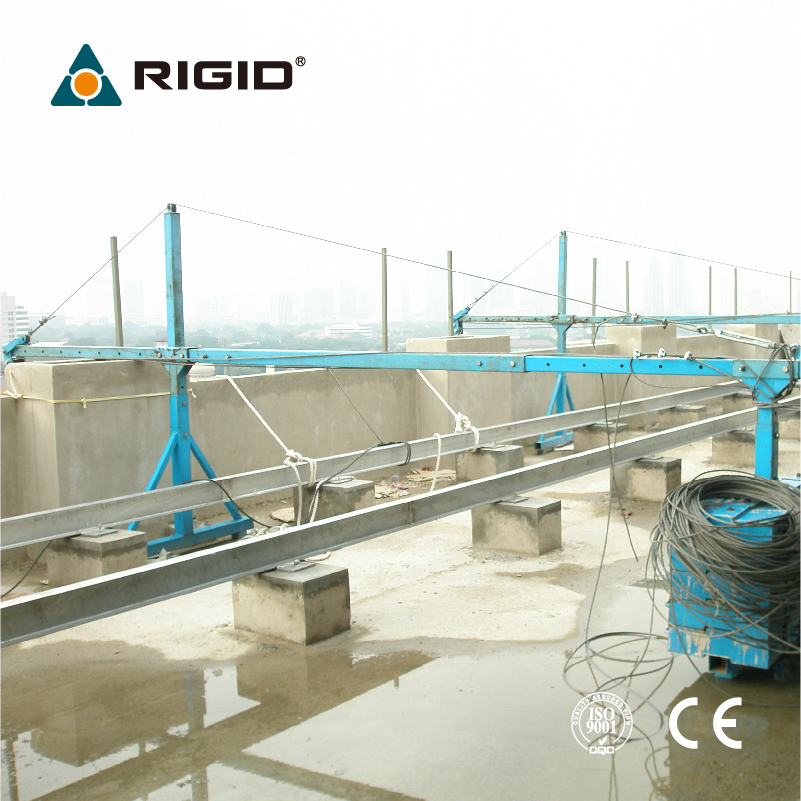
Roof-mounted anchoring systems bear the entire load of the setup. These mechanisms generally include adjustable jibs, heavy counterweights, and structural wire ropes. You must carefully evaluate their adjustability to different parapet heights. Buildings rarely feature uniform roof edges. Flexible anchoring systems adapt easily to complex architectural designs.
Calculating counterweight requirements accurately is an absolute necessity. Mistakes in these calculations lead to catastrophic failure. Use clear formulas provided by the manufacturer to ensure stability. Furthermore, structural load distribution matters heavily. Concentrating too much weight in one area damages the building's roof. You must spread the load safely across a wider footprint using appropriate support plates.
The working platform structure forms the modular basket where operators stand. This section contains safety balustrades, slip-resistant bottom decks, and reinforced mounting frames. Evaluating modularity helps you understand how easily you can scale the platform's length. A standard ZLP Suspended Platform allows flexible configurations ranging from one meter up to several meters.
Operators must strictly monitor payload-to-weight ratios. Maximizing efficiency without stressing the hoists requires a careful balance. Overloading the basket compromises the entire structure. Inspecting the weld quality on mounting frames ensures long-term fatigue resistance under dynamic loads.
The hoist operates as the primary engine of the platform. Evaluating internal components prevents costly downtime and erratic operation. Poorly manufactured hoists lead to frequent jamming and severe safety hazards.
When assessing an Electric Suspended Platform with Traction Hoist, you must look closely at the internal mechanics. Essential features include electromagnetic braking, efficient gear reduction systems, and precise rope guiding mechanisms. The electromagnetic brake must engage instantly the moment power cuts off. Gear reduction systems, often utilizing planetary gears, provide smooth power transmission without excessive noise or vibration.
Review performance metrics carefully. Verify lifting speed consistency under maximum load conditions. Ascending too quickly or unevenly creates dangerous pendulum effects. Ensure the motor features built-in thermal protection to prevent overheating during continuous operation. Finally, verify the system includes manual descent capabilities. Operators must be able to lower themselves safely to the ground during unexpected power failures.
The wire rope acts as the critical lifeline for the equipment. Specific diameter, core type, and tensile strength are crucial for a safe Wire Rope Suspended Platform. Most systems require specialized galvanized steel ropes designed specifically for traction hoists. Using generic ropes causes immediate internal damage to the hoist mechanism.
Implement strict rope jamming prevention measures. A jammed rope can snap under tension. Establish clear, daily inspection criteria for fraying, bird-caging, or structural damage. Broken individual wires compromise the entire lifting mechanism. You must replace the ropes immediately if they fail to meet minimum discard criteria established by international safety standards.
Addressing legal and regulatory liabilities requires strict attention to detail. Safety components are never optional upgrades. They form the non-negotiable compliance baseline for international labor safety standards. Ignoring these components exposes your organization to severe legal consequences.
Anti-tilt mechanisms represent the ultimate fail-safe. These include centrifugal or swing-arm safety locks. They instantly clamp the secondary safety wire rope if the platform tilts beyond a specific angle. This trigger usually occurs between 3 to 8 degrees of tilt. They also activate immediately if the primary working rope breaks.
You must evaluate calibration certification requirements carefully. Safety locks demand rigorous factory testing. Check the documented lock-reaction time to ensure immediate response during a free-fall event. Delayed clamping action results in severe injuries. Always request authorized calibration certificates before deploying the equipment on a live job site.
Upper and lower travel limiters prevent the basket from colliding with building overhangs or the ground. These mechanical switches cut power to the hoist the moment they strike an obstacle. Load cells provide another crucial layer of protection. They constantly monitor the weight inside the basket. The system halts the hoist immediately if users exceed the rated capacity.
Integration into the electrical control box must remain entirely tamper-proof. This design prevents dangerous operator overrides on site. Operators sometimes attempt to bypass load sensors to lift heavier materials. Tamper-proof enclosures ensure these critical safety functions remain active at all times, securing the compliance baseline.
Component selection shifts heavily based on the operational environment. You must adapt the equipment to meet specific longevity and frequency requirements.
Application Type | Primary Material Focus | Electrical Weatherproofing | Mobility Features |
|---|---|---|---|
Permanent/Semi-Permanent | Hot-dip galvanized steel | IP65 rating (high protection) | Fixed BMU tracks or heavy jibs |
Temporary/High-Frequency | Lightweight aluminum alloy | IP55 rating (standard protection) | Caster wheels, modular frames |
A Suspended Platform for Building Maintenance focuses on long-term, permanent, or semi-permanent installations. These platforms often integrate directly into Building Maintenance Units (BMUs). They remain exposed to harsh environmental conditions year-round.
They demand much higher weatherproofing standards for electrical control boxes, requiring IP55 or IP65 ratings to block moisture and dust. They also require robust anti-corrosion treatments. Standard paint degrades quickly under continuous UV exposure and rain. Hot-dip galvanization provides the necessary long-term protection against rust, ensuring the structural integrity lasts for decades.
A Suspended Platform for Facade Cleaning focuses entirely on temporary, high-frequency relocation. Cleaning crews move these units from building to building weekly. Therefore, they need lightweight aluminum structures for significantly faster assembly and disassembly.
Component needs include non-marking wall rollers to protect sensitive glass facades from scratches. Modular platform lengths allow crews to adapt easily to varying building profiles. A modular design ensures the basket can shrink to fit narrow shafts or expand to clean wide glass panels efficiently. Lightweight components reduce worker fatigue during frequent transport.
Procurement requires shifting your focus from product evaluation to vendor evaluation. A reliable supplier must provide total transparency regarding component sourcing. They must also demonstrate robust aftermarket support capabilities.
Component Traceability: Determine if the supplier manufactures critical components in-house. Do they produce their own hoists and safety locks? Outsourced safety components carry higher risks if the vendor lacks strict quality control oversight. In-house manufacturing ensures better synchronization between parts.
Testing and Certification: Request concrete proof of dynamic and static load testing. Demand CE, ISO, or OSHA compliance documentation for individual components, not just the assembled unit. A certified hoist means nothing if the safety lock lacks independent verification.
Spare Parts Availability: Assess the Service Level Agreement (SLA) for replacement parts. Equipment inevitably wears down. Delays in sourcing proprietary safety locks or hoist gears can halt a project for weeks. Ensure the vendor maintains regional warehouses or guarantees rapid global shipping.
Take actionable steps before signing any contract. Request a documented maintenance schedule directly from the engineering team. Ask for a detailed component Bill of Materials (BOM) before finalizing procurement. This document reveals exactly what brands and grades of materials constitute your equipment.
The safety and operational success of a suspended platform remain strictly dictated by engineering tolerances. You cannot rely on surface-level specifications. The true value lies in the durability of the hoists, the responsiveness of the safety locks, and the fatigue resistance of the structural materials. Compromising on these elements introduces severe risks to your job site.
Decision-makers must prioritize component-level certifications. Strict compliance adherence always outweighs baseline price when comparing quotes. A cheaper platform built with inferior electrical controls and uncertified safety locks eventually creates massive operational liabilities. Choose equipment that demonstrably meets rigorous international standards.
Always demand transparency from your selected vendor. Encourage your procurement team to request a technical component breakdown. Schedule a compliance-focused consultation to verify that the specified components match the unique demands of your upcoming project.
A: Industry standards require safety locks to undergo calibration every 12 months. Local labor regulations sometimes demand more frequent checks based on usage intensity. You must ensure authorized technicians conduct this testing in factory-approved environments to guarantee reliable reaction times during emergencies.
A: Lifespan depends entirely on usage cycles and environmental exposure rather than a flat time estimate. You must evaluate ropes based on strict discard criteria. Replace them immediately if you discover a specific number of broken individual wires, significant corrosion, or structural deformities like bird-caging.
A: We strongly advise against mixing components from different brands. Interchanging safety locks, hoists, or electrical boxes creates severe safety risks. This practice immediately voids manufacturer warranties and violates strict compliance baselines, as the components are not tested to work seamlessly together.


