
 English English
 Views: 0 Author: Site Editor Publish Time: 2026-08-05 Origin: Site


Accessing high-elevation, complex vertical structures presents a critical operational bottleneck where safety, time, and labor costs intersect. Traditional ground-supported scaffolding is often structurally impossible, financially prohibitive, or too time-intensive for high-rise facades, bridges, and industrial vessels. When ground-level obstructions or extreme heights render standard scaffolding obsolete, project managers must seek alternative vertical access solutions to maintain project momentum without compromising worker safety. Suspended access equipment offers a modular, highly flexible alternative to overcome these logistical hurdles. However, selecting the right system requires rigorous evaluation of load capacities, safety compliance, and manufacturer reliability to ensure operational success and risk mitigation. This guide explores the mechanics, applications, and evaluation criteria for deploying a suspended platform effectively across various challenging environments.
A suspended platform is primarily utilized for facade maintenance, high-rise construction, bridge restoration, and industrial vertical vessel inspection where ground access is unfeasible.
Technical evaluation must prioritize OSHA/international safety compliance, load capacity requirements, and the structural integrity of the suspension mechanism.
The total suspended platform price is dictated by material selection (aluminum vs. steel), motor quality, and the long-term availability of replacement parts.
Standardized models, such as the ZLP series suspended platform, provide predictable performance baselines for both standard commercial buildings and specialized infrastructure projects.
A suspended platform operates as a temporary elevated working area, commonly referred to in the field as a two-point swing stage scaffold. It relies on high-strength galvanized steel wire ropes connected to overhead suspension mechanisms. Electric hoist motors drive the system up and down the ropes, while independent safety locks provide a fail-safe mechanism against sudden drops. This architecture allows crews to ascend and descend vertical surfaces smoothly, establishing a stable workstation at virtually any height without relying on ground support.
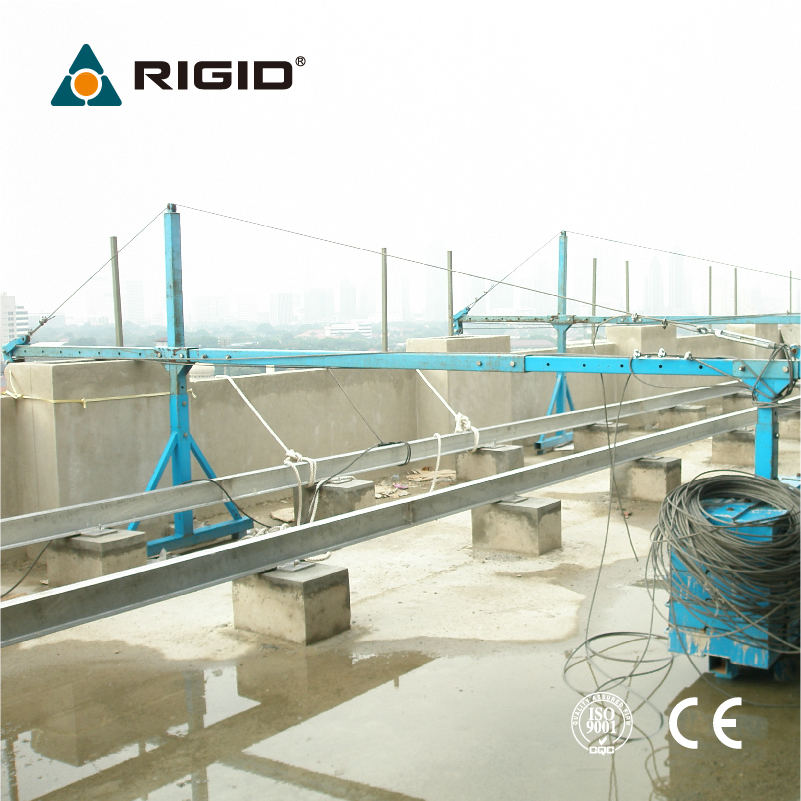
The core architecture consists of several distinct components that must work in unison. The suspension mechanism sits on the roof, utilizing counterweights to balance the load. The working platform itself is modular, built from pinned or bolted sections. The traction hoists pull the platform along the primary wire ropes, while the secondary ropes pass through the safety locks. A centralized electrical control box manages power distribution, motor synchronization, and emergency stop functions.
While the standard two-point swing stage handles most wide facade work, specific job site geometries require different configurations. Selecting the correct variation depends entirely on the structural profile of the building and the nature of the work being performed.
System Type | Primary Application | Key Advantage |
|---|---|---|
Two-Point Swing Stage | Standard commercial facades, window cleaning, painting | Wide working area for multiple personnel and materials |
Single-Point Work Cage | Confined spaces, narrow drops, silos, shafts | Compact footprint, fits into tight industrial spaces |
Multi-Point System | Heavy-duty industrial access, complex architectural layouts | Distributes massive loads across several suspension points |
Double-Deck Platform | Simultaneous multi-level facade installation | Allows two crews to work on adjacent floors concurrently |
Deploying suspended equipment eliminates the massive ground-up setup times associated with tubular scaffolding. You drastically reduce the structural footprint on the job site, which keeps pedestrian walkways clear and avoids damaging landscaping. Furthermore, it mitigates the inherent fall risks associated with continuously erecting and dismantling multi-level scaffolding frames day after day.
The operational trade-off involves relying entirely on overhead suspension points rather than ground-bearing weight. This demands strict adherence to rigging protocols and structural load calculations. You must verify that the roof slab or parapet can handle the concentrated point loads exerted by the suspension jibs and counterweights. If the roof cannot support the load, you cannot use the system.
Successful deployment requires meeting specific baseline criteria before any equipment arrives on site. You must evaluate the physical constraints of the building and the logistical realities of the project schedule.
Verify the roof load-bearing capacity for counterweights and suspension mechanisms through a structural engineer.
Identify and test structural anchor points for tiebacks and lifeline attachments.
Ensure access to a reliable, uninterrupted 3-phase power source to operate the electric hoists safely.
Confirm that the building facade can accommodate tie-in points to prevent platform sway during operation.
Establish a clear drop zone below the work area, barricaded to protect ground personnel from potential falling objects.
Suspended platforms dominate high-rise construction, specifically for curtain wall installation, exterior painting, concrete restoration, and commercial window cleaning. The modular nature of the platform lengths allows crews to accommodate varying building geometries. By adjusting the platform sections, workers can safely navigate around balconies, recesses, and complex architectural profiles without leaving the suspended workstation.
During concrete restoration, crews need space for heavy tools, patching materials, and debris removal. The platform must support this dynamic load while remaining stable. For window cleaning, the focus shifts to speed and smooth vertical travel. The hoists must provide consistent lifting speeds to allow cleaners to work efficiently across massive glass expanses.
Bridge maintenance involves severe logistical complexities, including under-deck access, anti-corrosion treatments, and structural cable inspections. Traditional scaffolding is often impossible over open water or active highways. Utilizing a ZLP Series Suspended Platform for Bridge Maintenance allows crews to deploy specialized rigging configurations tailored to infrastructure.
These setups bypass parapet walls and active traffic lanes. Riggers use custom suspension brackets clamped directly to the bridge girders or piers. This ensures critical infrastructure repairs proceed without disrupting public transportation or requiring extensive road closures. The platforms can be rigged to travel horizontally along the bridge span, providing continuous access to the underbelly for sandblasting and painting operations.
In confined or hazardous environments like silos, cooling towers, shipyards, and offshore oil rigs, suspended access is highly effective. These environments demand rapid deployment for vertical vessel maintenance. In industrial settings where lengthy setup times and facility downtime equal significant revenue loss, the ability to quickly rig and drop a platform into a silo or down a ship's hull is invaluable.
Welders and inspectors use these platforms to access the interior walls of storage tanks. The equipment must withstand harsh industrial conditions, including exposure to chemicals, abrasive dust, and saltwater. Single-point cages are frequently used here, lowered through narrow top hatches to allow a single inspector to assess the structural integrity of the vessel lining.
Mapping personnel and equipment weight requirements to standard hoist specifications is a primary responsibility for project managers. You must calculate the combined weight of the workers, their tools, and the materials they will consume during the shift. This total must never exceed the rated safe working load of the hoists.
Model Designation | Rated Load Capacity | Maximum Platform Length | Typical Application |
|---|---|---|---|
ZLP500 | 500 kg | 5 meters | Light maintenance, painting, inspection |
ZLP630 | 630 kg | 6 meters | Standard facade work, window installation |
ZLP800 | 800 kg | 7.5 meters | Heavy masonry, concrete repair, material hoisting |
ZLP1000 | 1000 kg | 8+ meters | Industrial applications, multi-worker crews |
Decision-makers must evaluate the trade-offs between platform length and maximum safe working loads. A longer modular platform increases the surface area for workers but inherently reduces the allowable weight capacity per square meter. If you build a 7.5-meter platform using ZLP630 hoists, you must strictly limit the number of workers and materials allowed on board to avoid overloading the motors.
Mandatory compliance with OSHA scaffolding standards (specifically 1926.452(p)) and equivalent international safety directives is non-negotiable. Equipment must feature secondary anti-tilt safety locks that engage immediately if the primary suspension fails or if the platform tilts beyond a specific angle (usually 3 to 8 degrees). These locks grip the secondary safety wire rope, arresting the fall instantly.
Anti-Tilt Safety Locks: Automatically engage upon detecting abnormal platform angles or sudden downward acceleration.
Manual Emergency Descent: Allows operators to safely lower the platform to the ground during a total power failure by manually releasing the hoist brakes.
Top Limit Switches: Cut power to the hoists if the platform travels too high, preventing it from crashing into the suspension mechanism.
Overload Sensors: Prevent the hoists from operating if the platform weight exceeds the rated capacity, protecting the motors and wire ropes from excessive strain.
Phase Sequence Relays: Ensure the motors only operate when the electrical phase is correct, preventing accidental downward travel when the "up" button is pressed.
Material choice directly impacts operational efficiency and handling on the job site. Aluminum offers easier handling, faster assembly, and natural corrosion resistance. This makes it ideal for contractors who frequently relocate their equipment between different commercial buildings. The lighter weight of aluminum components reduces worker fatigue during the rigging and dismantling phases.
Steel provides higher durability for heavy-duty industrial abuse and harsh environments. It withstands impacts from heavy tools and abrasive materials better than aluminum. Steel platforms are typically galvanized to resist rust, making them suitable for long-term deployment on construction sites where they will be exposed to the elements for months at a time. The selected material will influence overall longevity and maintenance requirements throughout the equipment's lifecycle.
The ZLP series suspended platform has become the benchmark for temporary suspended access equipment globally. Its standardized design ensures predictable performance, making it a trusted choice for contractors managing diverse portfolios of high-rise and infrastructure projects. Standardization guarantees widespread availability of compatible parts, wire ropes, and electrical components across different markets.
When a fleet utilizes standardized equipment, training becomes highly efficient. Operators learn one control system, one rigging protocol, and one set of emergency procedures. This uniformity reduces operator error and streamlines daily safety inspections. Project managers can swap hoists, platforms, and suspension jibs between different job sites without worrying about compatibility issues.
Critical components of the ZLP series dictate its reliability in the field. The traction hoist mechanism uses an "alpha" or "S" type rope guiding system, engineered for consistent lifting power under heavy loads without crushing the wire rope. The internal gears are machined from high-strength alloys and run in a sealed oil bath to ensure smooth operation and heat dissipation during long vertical runs.
Electrical control panels are housed in durable, weather-resistant casings to prevent moisture ingress and dust contamination. They utilize standardized contactors and breakers that are easy to source and replace if necessary. The galvanized steel wire ropes are specifically constructed for traction hoists, typically utilizing a 4x31SW+FC or similar configuration. This specific weave provides maximum tensile strength, flexibility, and resistance to environmental degradation over extended use.
The ZLP series excels in adaptability for complex building shapes. It can be customized with corner sections (90-degree, 45-degree, or adjustable angles) to navigate angled building facades. This allows crews to wrap the platform around the corner of a building, providing continuous access without needing to rig two separate platforms.
Adjustable suspension jibs allow for varying overhang distances, accommodating deep parapet walls or architectural features that protrude from the roofline. Multi-tier setups can be configured for non-standard architectural features, providing simultaneous access to multiple levels of a structure. This is particularly useful for installing large curtain wall panels that require workers at both the top and bottom of the panel simultaneously.
The initial capital expenditure is driven by raw material costs, the origin of the hoist motors, and the quality of safety components. The total suspended platform price also reflects the engineering support and testing that goes into the product before it leaves the factory. Premium models with advanced safety sensors, imported European motors, and lightweight aluminum extrusions require a higher initial investment than basic galvanized steel configurations.
You must also account for the frequency of wire rope replacement, motor maintenance intervals, and annual compliance certification fees. High-quality hoists cause less wear on the wire ropes, extending their lifespan and reducing replacement frequency. Cheaper hoists often chew through ropes quickly, leading to frequent downtime and higher operational expenses over the life of the equipment.
Establishing strict criteria for shortlisting suppliers is vital for long-term operational success. A reputable suspended platform manufacturer must provide verifiable factory certifications, such as ISO 9001, demonstrating a commitment to quality control. They must supply documented load-testing procedures for every hoist and safety lock that leaves their facility.
Request structural engineering calculations for the suspension mechanisms to verify they meet local safety codes.
Evaluate their after-sales support, including the availability of technical training for your riggers and operators.
Check their responsiveness for troubleshooting and their ability to guarantee supply chains for proprietary replacement parts.
Look for CE or UL certification on all electrical components and control panels.
Avoid suppliers offering unusually low quotes, as this often indicates substandard metallurgy, inferior motor windings, or a lack of rigorous safety testing.
Improper rigging and counterweight miscalculation pose severe risks, potentially leading to catastrophic roof failure or platform collapse. If the counterweights are insufficient for the load and overhang distance, the suspension mechanism will tip over the edge of the building.
Mitigation mandates structural engineering sign-off for roof load capacities before any equipment is loaded onto the roof. Crews must enforce strict adherence to the manufacturer's counterweight formulas, which dictate the exact number of weights required based on the jib overhang and the rated load of the hoists. Furthermore, riggers must utilize independent tiebacks, securing the suspension mechanism to structurally sound anchor points on the roof, such as concrete columns or engineered anchor rings, to provide a secondary layer of security.
Environmental and weather hazards threaten stability and worker safety. High winds can turn a suspended platform into a dangerous pendulum, smashing it against the building facade or tangling the wire ropes. Lightning strikes pose a severe electrocution risk to workers on a metal platform suspended by steel cables.
Establish strict operational wind-speed limits, typically halting work if winds exceed 10 to 14 meters per second (22 to 31 mph). Implement secure tie-in procedures, using suction cups, lanyards, or building anchors to secure the platform to the facade and prevent sway during operation. Mandate daily pre-shift inspections of wire ropes for fraying or bird-caging, and test the safety locks manually before anyone steps onto the platform. Cease all operations immediately if lightning is detected in the vicinity.
Conduct a thorough site audit to define rigging constraints, roof load capacities, and specific access requirements before procurement.
Request detailed technical specifications, load testing documents, and compliance certificates from a vetted manufacturer.
Align specific operational needs with standardized systems like the ZLP series, prioritizing material durability and verifiable safety mechanisms.
Implement rigorous daily inspection protocols and maintenance schedules to maintain equipment integrity over its lifespan.
Ensure all operators and riggers complete certified training on emergency descent, load management, and fall protection procedures.
A: The most common type is the two-point swing stage used for wide commercial facades. Other variations include single-point work cages for confined industrial spaces, multi-point systems for heavy-duty architectural access, and double-deck platforms for simultaneous multi-level work.
A: The maximum height is limited by the length of the steel wire rope and the lifting capacity of the hoist motor. Standard systems easily operate at heights of 100 to 150 meters. Specialized configurations with heavy-duty hoists and longer ropes can exceed 300 meters for supertall skyscrapers.
A: Costs vary widely based on material selection, hoist motor quality, platform length, and integrated safety features. Premium aluminum models with advanced safety sensors and imported motors require a higher initial investment than basic galvanized steel configurations.
A: The primary difference is the rated load capacity. A ZLP630 is engineered to safely lift 630 kg of personnel and materials, while a ZLP800 is designed for heavier applications, safely lifting up to 800 kg. The ZLP800 utilizes more robust hoists and thicker wire ropes.
A: Operation must cease when wind speeds exceed the manufacturer's specified safety limits, typically around 10 to 14 meters per second. Platforms must be securely tied into the building facade using specialized anchors or suction systems to prevent dangerous swaying during breezy conditions.
A: Equipment requires daily pre-shift visual inspections by the operators. Comprehensive inspections by a competent person must occur before initial use, after any structural modifications, following severe weather events, and at regular intervals mandated by local safety regulations.
A: Yes, modular platforms can be customized using specialized corner sections, adjustable brackets, and varying platform lengths. This modularity allows the platform to contour safely to curved, angled, or highly complex architectural profiles without compromising structural integrity.


